Αναρτήσεις

Εμφάνιση αναρτήσεων με την ετικέτα bacteria

How bacteria protect themselves from plasma treatment
Εικόνα
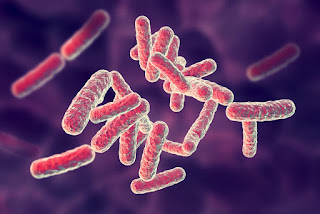
image credit: medicalnewstoday.com Plasmas are created from gas that is pumped with energy. Today, plasmas are already used against multi-resistant pathogens in clinical applications, for example to treat chronic wounds.  "Plasmas provide a complex cocktail of components, many of which act as disinfectants in their own right," explains Professor Julia Bandow, head of the RUB research group Applied Microbiology. UV radiation, electric fields, atomic oxygen, superoxide, nitric oxides, ozone, and excited oxygen or nitrogen affect the pathogens simultaneously, generating considerable stress. Typically, the pathogens survive merely several seconds or minutes. In order to find out if bacteria, may develop resistance against the effects of plasmas, like they do against antibiotics, the researchers analysed the entire genome of the model bacterium Escherichia coli, short E. coli, to identify existing protective mechanisms. "Resistance means that a genetic change causes...

Different bacteria use same cell surface molecule to invade tissue and promote infection

Εικόνα
image credit: sciencedaily.com A new study identifies a single molecule as a key entry point used by two types of dangerous bacteria to break through cellular barriers and cause disease. The findings, published March 19 in the journal mBio, suggest that blocking the interaction between the molecule, known as CD40, and bacteria may represent a universal strategy for preventing life-threatening illnesses, including toxic shock syndrome. The two bacteria, Staphylococcus aureus (staph) and Streptococcus pyogenes, cause many serious illnesses. According to the Centers for Disease Control and Prevention, staph causes 70,000 cases of highly fatal pneumonia, 40,000 cases of severe heart infections, and over 500,000 post-surgical infections each year. Streptococcus pyogenes causes 10 million cases of sore throat and 30,000 cases of severe invasive diseases annually. "Many of the infections caused by these two bacteria start on the skin or on the mucosal surfaces that line body caviti...